What recirculation fixes
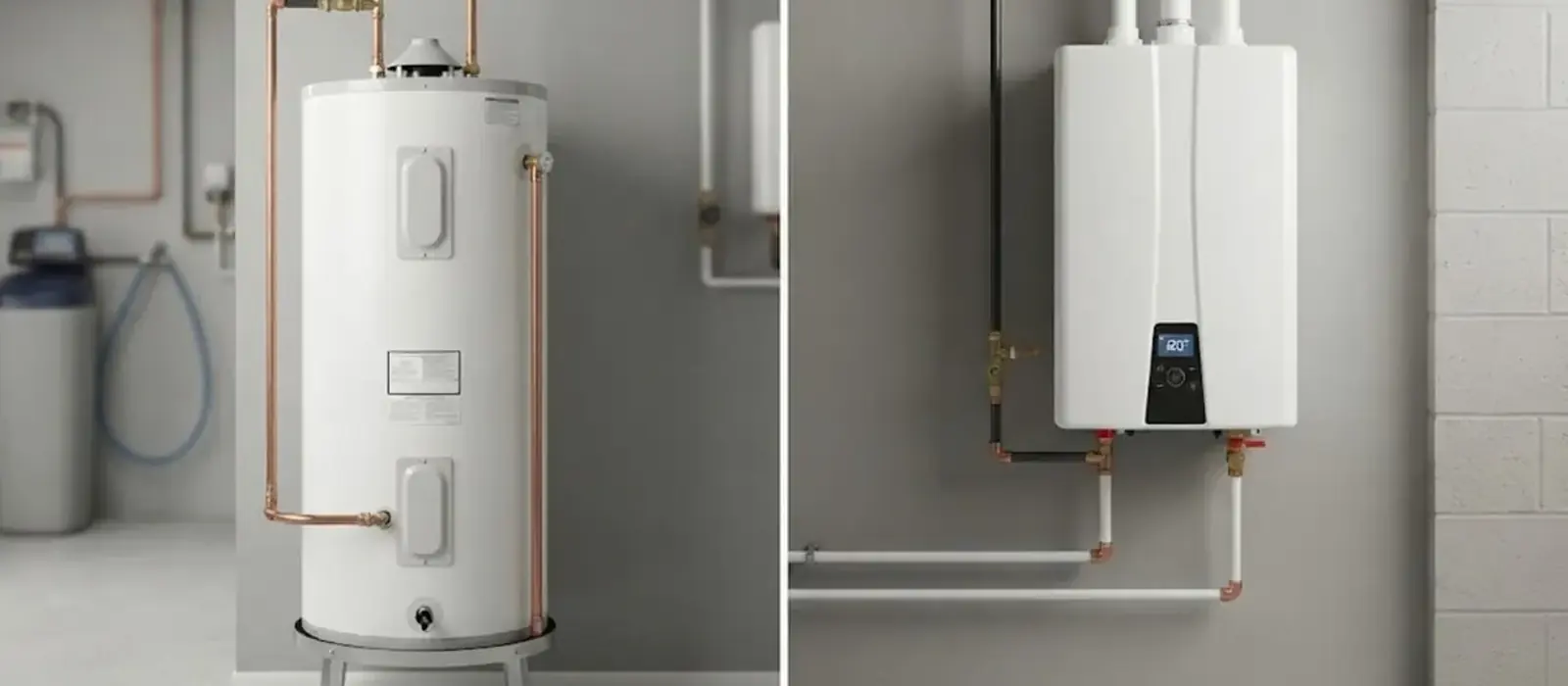
A tankless heater makes hot water on demand, but it cannot shorten the pipe between the heater and the faucet. Cold water sitting in that pipe has to run out first. In a long single-story house, or a two-story home with the heater at one end, the wait can be long and the water poured down the drain is wasted.
A recirculation system keeps the pipe warm. When you press a button, trip a sensor or run a timer, a pump moves cooled water back to the heater and sends hot water forward. The next time you open the tap, hot water is already close.
Three ways to build the loop
| Setup | How it works | Best for |
|---|---|---|
| Built-in pump in the heater | The unit has a pump and a mode that sends water through a return line | New installs or replacements with a return line already in the walls |
| External pump with return line | A separate pump and a dedicated pipe bring water back to the heater | Houses where a return line can be added when the walls are open |
| Crossover valve under the farthest sink | A valve lets hot water flow into the cold line until it warms | Existing homes with no return line, with a warm cold-tap trade-off |
The crossover valve is the inexpensive retrofit, but it sends lukewarm water through your cold line at that fixture. A dedicated return avoids that. If you are repiping the house or opening walls for a remodel, ask about a return line then, because adding one later means opening drywall.
What it costs to run
Pump electricity
A recirculation pump uses very little power, but a pump that runs all day adds up. Timers and demand switches cut it.
Heat loss from the loop
Hot water in the pipes loses heat to the walls. A timer limits recirculation to the hours you use hot water.
Water saved
The savings come from the water you no longer run down the drain while waiting.
Heater wear
More firing cycles can mean more wear on the heat exchanger. Demand-based setups fire less often than always-on ones.
Control options
Timer
The pump runs during set hours, such as mornings and evenings. Simple, but it runs when nobody is home.
Push button or sensor
You press a button or a motion sensor triggers it. Hot water is ready in about a minute.
Temperature-based
A sensor starts the pump when the loop cools below a set point.
Smart controls
App or schedule based. Useful for variable households.
Sizing and compatibility
Not every tankless heater supports recirculation, and some require a buffer tank to prevent short cycling. Check the model's specifications. Gas units also need enough gas supply and a proper vent whether or not there is a pump.
If you are replacing a tank heater with a tankless unit, we compare the options in tankless water heater service. Planned work is covered under water heater installation.
Deer Park permits for the loop
The City of Deer Park describes its plumbing permit as covering all plumbing work, with water heaters named as an example. Adding a recirculation line and pump alters the plumbing system, so confirm with the Public Works Permit Office at 281-479-2394 whether your project needs a permit. Homeowners can pull permits on a primary residence with a Harris County homestead exemption, and a contractor must pull the permit if a contractor does the work.
Source type: City of Deer Park Building Permits and Contractors pages
Is it worth adding?
It is likely worth it if
- Hot water takes a minute or more to reach your farthest bath or kitchen
- You are already opening walls or replacing the heater
- You value water savings and comfort
- You can use a timer or a push button to limit run time
It is probably not worth it if
- The heater sits close to the fixtures you use most
- Your wait is only a few seconds
- You cannot add a return line and dislike a warm cold tap
- The home is rarely occupied
A plumber can time how long hot water takes to arrive at each fixture and estimate how much water is wasted. That gives you a number to weigh against the equipment cost. If the numbers are small, a recirculation system is a comfort upgrade and not a money saver.
Waiting too long for hot water?
Call the 24/7 line and describe your layout. A plumber can tell you whether a loop fits.
Recirculation questions
What to do before you touch the unit
Safety steps for tankless and recirculating systems
- Turn off the power or gas to the unit before opening any panel or touching the pump.
- Do not work on a gas unit if you smell gas. Leave and call your gas utility or 911 from outside.
- Do not bypass or remove venting, even for a test.
- Let hot pipes cool before you touch a fitting or valve.
- Follow the manufacturer's manual for the exact model, and call a plumber for gas or venting work.
The city lists a plumbing permit for all plumbing work. Call the Permit Office at 281-479-2394 and describe the project. If a contractor does the work, the contractor pulls the permit.
It can, because less water runs down the drain. The effect depends on how long you waited before.
Yes. A crossover valve works without new pipe. A dedicated return line is better if walls are open.
Many models support it. Check the manufacturer's list. Gas supply and venting still need to be right.
Yes. See plumber in La Porte.